You can only get painted wallpaper off the wall by first opening up the paint layer, so that water or steam can reach the glue behind it. We remove painted wallpaper for €9.75 per m², excluding VAT.
The more often the wallpaper has been painted over, the denser the layer and the more work it is per m².
Painted-over wallpaper to come off? Request your quote
Our own tradespeople open up the paint layer and remove the wallpaper and glue residue, at a fixed price per m² that you know in advance.
Rated 4.9 out of 5. ★★★★★ 4,9 from 215+ Google reviews · 97 in-house tradespeople on permanent contracts · 10 years of experience · 1-year guarantee on wallpapering work
Why is painted wallpaper so hard to remove?
Wallpaper comes off when the glue behind it softens. With bare paper wallpaper, warm water simply soaks through the paper. A paint layer keeps that water out, just like the plastic layer of vinyl wallpaper.
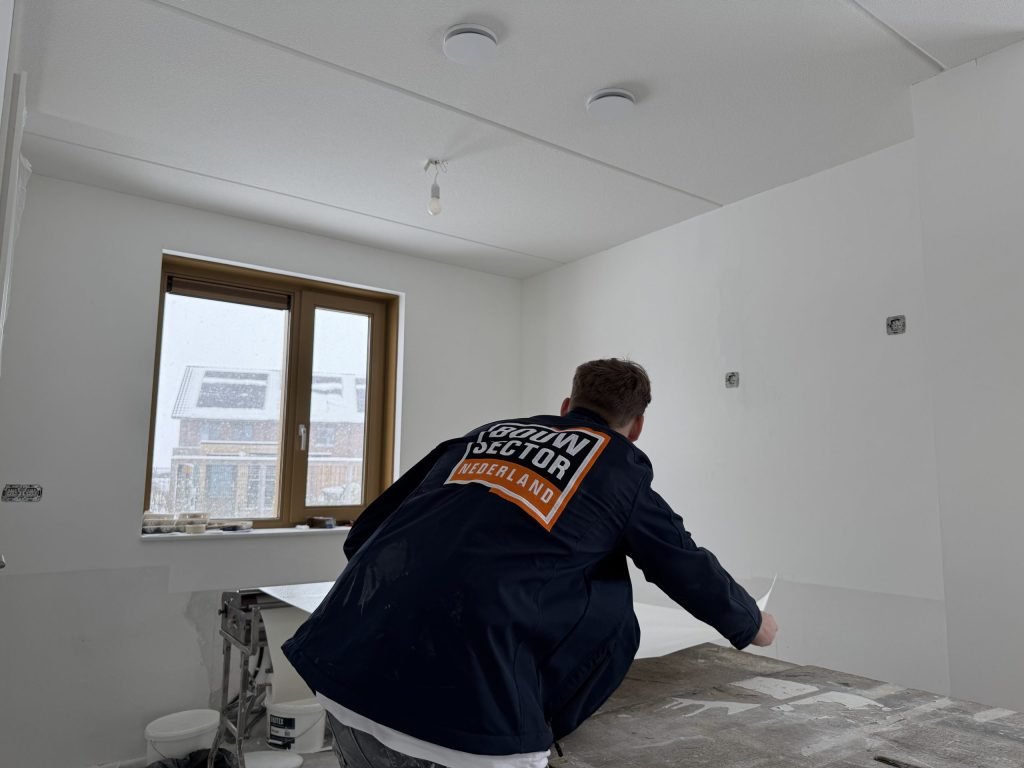
You can sponge for hours without anything happening. The water stays on the paint or runs down the wall, while the glue stays dry.
In older homes, such as a 1950s house, wallpaper has often been painted over several times, sometimes with different types of paint. Each layer makes the wallpaper denser and stiffer. It then tears into small pieces rather than coming away in strips.
Note: not all painted wallpaper is paper wallpaper. Renovation fleece and fibreglass wallpaper are made to be painted and are fixed with more glue. Removing fibreglass wallpaper therefore calls for a different approach and a different price.
How do you remove painted-over wallpaper?
The core is always the same: first open up the paint layer, then let the moisture soak in, and only then scrape. If you skip the first step, you end up attacking the wall with the filling knife and damaging the plaster layer.
- Cover up. Cover the floor and unscrew the cover plates from switches and sockets.
- Open up the paint layer. Score or perforate the wallpaper with a wallpaper scorer or spiked roller, using light pressure and without cutting into the wall.
- Let the moisture soak in. Wet the wallpaper, use a wallpaper steamer or a stripping liquid that dissolves the glue.
- Scrape. Work from bottom to top with a filling knife under the wallpaper, not into the wall.
- Clear the glue residue. New wallpaper or paint does not stick well to old glue.
- Let it dry. Give the wall at least 24 hours before work continues.
If the wallpaper still will not come off after soaking, the paint layer has not been opened up enough. Scraping even harder only makes things worse. On plasterboard walls, extra care is needed: a scorer easily pierces the cardboard, and wet cardboard comes away along with the wallpaper.
How can you tell whether there is wallpaper under the paint?
That is not always visible. A wall that looks smooth and painted can hide a layer of wallpaper, especially in homes that previous occupants have done up.
Look at the seams first. Walk along the wall with a lamp held at an angle: vertical lines at regular intervals point to strips of wallpaper. If a corner has come loose by a skirting board, socket or window frame, gently prise it open. If you see paper, fleece or a woven fabric, you have your answer.
If you see a coarse, regular woven pattern through the paint, it is probably fibreglass or woven glass fabric wallpaper. A smooth layer with a slight fibre structure may be renovation fleece. The difference determines which approach and which price line applies, so we establish it during the site visit.
Can’t you simply paint painted wallpaper again?
Sometimes you can, as long as the wallpaper is firmly attached everywhere. But not endlessly. Ordinary paper wallpaper is not made to be painted over again and again. After a few times the texture clogs up or the top layer lets go, and every new coat of moisture from the paint makes that risk greater.
If you see bubbles, open seams or edges coming loose, the wallpaper has reached the end of its life. You would effectively be painting over a surface that is already coming away. If you want a wall that you can give a new colour more often, renovation fleece that you can repaint later suits better.
A thin plaster layer or plasterwork over the wallpaper is not a solution either. A new layer holds only as well as the layer beneath it, and that would be old wallpaper on old glue. For a smooth painted wall, the wallpaper therefore has to come off first.

What does it cost to have painted wallpaper removed?
Removing painted wallpaper costs €9.75 per m² with us. The price list also includes surcharges for extra layers and for painted wallpaper. Which lines apply to your wall depends on what exactly is under the paint.
Prices exclude VAT. For renovation work on a home over 10 years old, VAT is usually 6%, otherwise 21%. The exact rate is shown in your quote.
An example: removing painted wallpaper in a bedroom with 30 m² of wall costs 30 × €9.75 = €292.50. A living room with 45 m² of wall comes to 45 × €9.75 = €438.75. Our average rate for wallpaper removal is 100 m² per day.
What we find during the site visit, such as a second layer or fibreglass under the paint, is then shown in the final quote. That is how what wallpaper removal costs depends on the type and the number of layers, and every line comes from our price list.
Wallpaper calculator: your m² and price
Enter your home’s floor area and see a price estimate straight away, without leaving your details first.
Who takes the wallpaper off and finishes the wall again?
Our own tradespeople. Bouwsector België has 97 tradespeople on its payroll: 40 wallpaper hangers, 32 plasterers and 25 painters. Whether new wallpaper, a layer of plaster or paint goes on after removal, the same company does it, in one schedule.
If you want to paint straight after removal, the wall has to be flat. Small holes and a rough surface will otherwise stay visible through the paint. So it is important to first level the wall before painting.
If you are not sure what is under the paint, say so in your request and mention what you saw at a loose corner. The free quote you receive within 24 hours is based on what you describe. If we find fibreglass or a second layer underneath during the site visit, that appears in the final price.
Customers rate our work in our Google reviews. And for other types as well, you can have us remove your wallpaper, each with its own approach.
 By the Bouwsector België team, 97 in-house tradespeople · reviewed by